reverse chronological order
»Dunbar
»Summer
»Jonathan Strange & Mr. Norrell
»The Accidental
»Miracle Country
»Gone at Midnight
»The Mirror & the Light
»Pew
»Why Fish Don't Exist
»Miss Jane
»2 A.M. at the Cat's Pajamas
»Parakeet
»A Nearly Normal Family
»Every Night the Trees Disappear
»The Selected Works of T.S. Spivet
»Of Walking in Ice
»The Death of Mrs Westaway
»A Complicated Kindness
»The Outsider
»How to Be Both
»Spring
»The Miraculous Journey of Edward Tulane
»Winter
»Drinking: A Love Story
»The Last Policeman
»My Name is Lucy Barton
»Autumn
»Less
»Disappearing Earth
»Manhattan '45
»Love in the Time of Cholera
»Strangers on a Train
»Antisocial
»The Fact of a Body
»Upstate
»The Immortalists
»The Woodlanders
»Dept. of Speculation
»Conversations With Friends
»The Family Fang
»A Room With a View
»Under the Greenwood Tree
»Howards End
»The Group
»Olive Kitteridge
»The Leopard
The 2019 List
The 2018 List
The 2017 List
The 2016 List
The 2015 List
The 2014 List
The 2013 List
The 2012 List
The 2011 List
The 2010 List
The 2009 List
The 2008 List
All-time favorites
Theft,
Peter Carey
JR,
William Gaddis
Winter's Tale,
Mark Helprin
Sometimes a Great Notion,
Ken Kesey
Moby-Dick,
Herman Melville
Martin Dressler,
Steven Millhauser
Housekeeping,
Marilynne Robinson
Franny & Zooey,
J.D. Salinger
A Complicated Kindness,
Miriam Toews
Infinite Jest,
David Foster Wallace
Delta Wedding,
Eudora Welty
Honorable mentions: Paul Auster, Rick Bass, Michael Chabon, Charles Dickens, Stephen Dobyns, Neil Gaiman, Thomas Hardy, Graham Swift, Tim Winton.
Call it a rut or call it a groove: For the third year in a row, I read 46 books. I must say it was a pretty underwhelming crop. That's largely because of the library shutdown. For several months, I was restricted to books I could download or already had, and even when the libraries started allowing pickups, I couldn't browse. That said, the top two books on this year's list, I really liked.
And with that, I'm bringing my book blog to a close. I don't actually know if anyone besides me ever looked at it, but if you're reading this, thanks for stopping by. It would make me very happy to think I might have pointed you toward a book you ended up liking.
Favorites
1. A Complicated Kindness, Miriam Toews
2. Parakeet, Marie-Helene Bertino
3. Why Fish Don't Exist, Lulu Miller
4. Winter, Ali Smith
5. Less, Andrew Sean Greer
All 46 books
 Dunbar (2017, Edward St. Aubyn)
 Why I picked it: When I was deciding a couple years ago which of the Hogarth Shakespeare retellings to read, I gave the edge to Jo Nesbo's "Macbeth" over this. Since then, I read St. Aubyn's Patrick Melrose series, and it reminded me that this was still out there.
What it's about: Modern-day retelling of "King Lear," with the title character a Canadian publishing magnate.
What I thought: I liked it well enough, though, as with the Nesbo "Macbeth," I thought my enjoyment might be enhanced by better knowledge of the original. Then I read a synopsis of "King Lear," and I'm kind of glad this one didn't hew too close to it. This one had the good staggering-about-on-the-moor bit without trying to find cognates to all the battles and such.
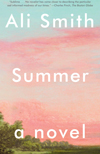 Summer (2020, Ali Smith)
 Why I picked it: End of quartet I've been reading this year.
What it's about: A random collection of Britons navigate their way through the pandemic, with detours into Brexit/immigration concerns.
What I thought: I liked "Winter" and "Spring" much better. For me, this one was pretty much on par with the first, "Autumn." It has characters and themes from the other three, and I imagine it's a little confusing if you're trying to read it as a standalone book. As I've come to expect from Smith, the best of the new characters is a teenager — in this case, a 13-year-old boy who is introduced as he plays a trick on his older sister that sends her to the emergency room.
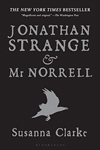 Jonathan Strange & Mr. Norrell (2004, Susanna Clarke)
 Why I picked it: I had seen this one in libraries numerous times in the past 15 years and a few times had picked it up and flipped through it and thought, "Looks like too much fantasy for my taste, especially at 800 pages." But, with the library pickings being slim these days, a New Yorker profile of Clarke (on the occasion of her second novel) was enough to put it on my list.
What it's about: Two English magicians in the early years of the 19th century — not stage magicians, but people who cast spells and such.
What I thought: If I had realized how much history this had in it, I would have gone for it sooner. There are a lot of real people wandering through, and a big chunk of it takes place on the Portuguese battlefields of the Napoleonic Wars. So that balanced out the fantasy, which as it turns out was not too hard to take. It is quite long — it's a little mind-blowing when I look back on all that went on in my life in the weeks this was on my iPod — but it moves along. Especially if you like the history parts.
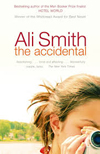 The Accidental (2005, Ali Smith)
 Why I picked it: With the libraries closed, it's getting harder for me to find books I want. While I am waiting for Smith's "Summer" (last of her four-part novel series) I figured this earlier work would be a good bet.
What it's about: Because of a misunderstanding, a family of four, each of them in their own personal distress, takes in a disruptive guest at their vacation house.
What I thought: This was the fifth of Smith's novels that I've read, and they've all been very good — thoughtful and adventurous and not afraid of making the reader do a little work. She's particularly good at writing about adolescents, and they are two of the main characters here. The path she takes with this book subverts the conventional narrative; it gets pretty dark and disturbing before it emerges into a tenuous hopefulness. The jolt of the last line made me laugh out loud.
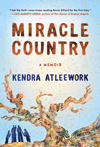 Miracle Country (2020, Kendra Atleework)
 Why I picked it: I cannot remember where I saw this one mentioned, but I do remember I was surprised that someone had written a memoir about growing up in Swall Meadows.
What it's about: The writer is a young woman who grew up on the east edge of the Sierra near Bishop and returned there after college.
What I thought: Bishop is a place where I've spent a lot of time, and I was interested in the views of someone who is from there and then went away and then decided to come back. For much of this book, I felt like the writing, the self-conscious poeticism, was getting in the way of the personal story. I wished it would just settle down a little and aim to connect. And because I already knew a lot about the history and the literature of the area, those parts didn't interest me much. I would recommend it, though, for somebody who was a little less connected to Bishop and was interested in a good narrative set in off-the-beaten-track California. One thing I give it big points for: I was expecting the standard Owens Valley native's view of William Mulholland — "He ruined our paradise! For the lawns and swimming pools of Los Angeles!" — and Atleework surprised me by going a little deeper into his personality and motivations and coming up with something beyond the usual stereotype.
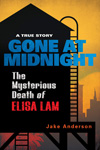 Gone at Midnight: The Mysterious Death of Elisa Lam (2020, Jake Anderson)
 Why I picked it: I read a blurb about it somewhere, and I like a good true-crime story.
What it's about: A young woman who disappeared from a downtown Los Angeles hotel in 2013 and was found dead almost three weeks later.
What I thought: In my description below of "Why Fish Don't Exist," I mention books that would be better left as magazine stories. This is one. Anderson admits upfront that he has few sources other than the internet. Lam's family, the police and the hotel employees would not speak to him. He pads out the book with information on any number of related angles — the hotel's history, suicides, depression, the Night Stalker, websleuths — as well as his personal stories. I ended up flipping past a lot of pages looking for solid information on Lam's death, and I never did find much.
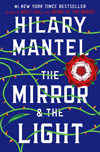 The Mirror & the Light (2020, Hilary Mantel)
 Why I picked it: I had read the first two of the trilogy, "Wolf Hall" and "Bring Up the Bodies."
What it's about: The last years of Thomas Cromwell, right-hand man to Henry VIII.
What I thought: All these years and all these pages later, it's understandable that "The Mirror & the Light" wouldn't seem as fresh and gripping as the groundbreaking first installment. It's more (800 pages more) of the same: Tudor history presented as political intrigue, with a cast of well-drawn characters and a backdrop of well-researched daily life of 475 years ago. If you liked the first two, by all means read this; it's certainly not a letdown. It could even stand on its own, though I think it benefits greatly from the arc of the series.
Anybody who has enough interest in Tudor history to make it to the third book knows how it has to end, and that hangs over the whole narrative. There are also semi-sly references to other personages and artifacts known to the modern reader — e.g., Hans Holbein's portraits of Henry and Anne of Cleves, and the giddy teenager on her way to being Henry's ill-fated fifth bride. Sometimes it seemed like too much historical detail jammed in there when I'd rather just stick with the personal stories. I was impressed by the ending, though, how it wove together threads of Cromwell's past with his last days in the Tower of London.
I listened to this one. The narrator, Ben Miles, played Cromwell in the London stage version of the first two parts, and overall he is very good. I did, though, have an issue with what I thought were excessive mouth noises, particularly during meal scenes. I fixed that by using a pair of dollar-store earbuds that were so crackly I couldn't discern the mouth noises.
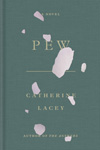 Pew (2020, Catherine Lacey)
 Why I picked it: Good reviews in the New Yorker and New York Times.
What it's about: A mysterious young person found sleeping in a small-town church is taken in by some of the congregants.
What I thought: It's an intriguing premise. Pew, not deigning to speak more than a few words over the course of the story, wanders through the lives of self-satisfied gentry and wounded outsiders, serving as a mirror for assumptions and prejudices. (It is not known by the townspeople or the reader whether Pew is male or female, white or black or neither.) Pew's arrival coincides with preparations for a mysterious traditional event that has heavy overtones of Shirley Jackson's "The Lottery." After the foreboding build-up to the Forgiveness Festival, though, the conclusion seemed rushed.
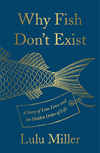 Why Fish Don't Exist: A Story of Loss, Love, and the Hidden Order of Life (2020, Lulu Miller)
 Why I picked it: Short blurb in New York Times, and it ties into my California history reading.
What it's about: Oof. I'll go with the shortest precis: It's about David Starr Jordan, ichthyologist and first president of Stanford University.
What I thought: I've run across some bad books that were basically what would be a decent magazine story padded out to 200 pages with tangents stretched to the breaking point and stories from the author's own life. This book is how that format looks when it's done right. The core of it is a pretty amazing mystery: Could Jordan have murdered Jane Stanford, the woman who with her husband founded the university? Then it spins out into an examination of Jordan's psyche and then into the whole issue of imposing a taxonomy on all the Earth's myriad forms of life. (In a supporting role is Jordan's mentor Louis Agassiz, who I had recently encountered in my re-reading of "The Selected Works of T.S. Spivet." He was a semi-villain in that one.) I hadn't previously been aware of the scientific approach known as cladistics, but, yes, there is a strong case to be made that either fish don't exist or we're all fish. This is a mind-stretching book in the best of ways.
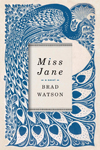 Miss Jane (2016, Brad Watson)
 Why I picked it: Brad Watson wasn't on my radar until I read his obituary in June in the New York Times. (He was 64 and lived in Laramie.) The descriptions of both of his novels landed them on my list.
What it's about: The life of a Mississippi woman born — with an unusual physical defect — to a just-getting-by farm family in the 1920s.
What I thought: In the first pages, I expected this to be more of Southern gothic, or magical realism, but it's a pretty straightforward story about the life of one person. It was interesting to realize that Jane is born close to the time and place of "Delta Wedding;" there was a definite Welty feeling in the tone. And a little Faulkner, too, but, again, much less gothic. More than once when I was reading it I wondered how Watson landed on this rather singular idea. The answer, from my re-reading of the obit: He had a relative who had a never-discussed defect much like Jane's.
 2 A.M. at the Cat's Pajamas (2014, Marie-Helene Bertino)
 Why I picked it: I had just finished "Parakeet" and I saw the library had this ebook available.
What it's about: Intertwined stories of one pivotal day in the life of a 10-year-old girl, her teacher and the owner of a Philadelphia jazz club.
What I thought: It isn't as good as "Parakeet," but I still liked it a lot. The girl, Madeleine, is a very appealing character. All three stories are good, and I liked the way they were connected — especially after reading in the author interview at the end that Bertino had initially written the book with the three told serially. It must be hard to completely scrap your structure and start all over. My favorite bit of plotting was the unexpected resolution of the low-key mystery involving what happened when Madeleine was the featured singer at her Catholic school's chapel service. One slightly off-putting element that I certainly wouldn't have noticed if I hadn't just finished "Parakeet": At least a couple times Bertino uses descriptive phrases that also show up in the later book.
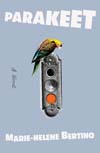 Parakeet (2020, Marie-Helene Bertino)
 Why I picked it: Good review in NYT
What it's about: On the eve of her wedding, a New Yorker in her mid-30s has a run of odd experiences.
What I thought: I really liked this one. It's short, 170 pages, and tightly but not fussily plotted. It starts out with the unnamed protagonist getting a directive from a bird she thinks is her dead grandmother, and then spirals out to eventually reveal the details of some recent traumas that had been hinted at, then comes back to the bride on her wedding day. The writing is sharp and funny and original — it made me slow down so I wouldn't miss some of the funny lines — and the characters are well-drawn. It's like nothing I've read before: a little surreal, but totally believable. I kept thinking about a movie version because I wanted so much to see some of the scenes, and I have picked Charlie Kaufman to direct it.
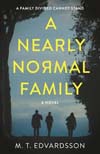 A Nearly Normal Family (2019, M.T. Edvarddson)
 Why I picked it: The New York Times had a guide to Scandinavian noir, and it recommended this one.
What it's about: The 18-year-old daughter of a preacher and a lawyer is accused of murder.
What I thought: I wouldn't recommend it. I'm not even sure why I stuck with it. It's not badly done, but I would want it more noir, more sophisticated in the characterization and plot. It seems to be presenting the ending as a twist, but to me it was more of a shrug. The one element that was pretty interesting was the details of the Swedish judicial system, as contrasted to that in the U.S. Maybe I should have given a little more weight to the fact that the writer usually writes for the Y.A. market.
 Every Night the Trees Disappear: Werner Herzog and the Making of "Heart of Glass" (2012, Alan Greenberg)
 Why I picked it: Having watched "Heart of Glass," I was seeking some elucidation as to what the hell was going on there.
What it's about: Notes from the set of "Heart of Glass," and a screenplay (though it frequently differs from what is actually seen on screen).
What I thought: Not a very good book. I have read some good books about the making of a single movie (including Eleanor Coppola's "Notes on the Making of 'Apocalypse Now,'" Jan Stuart's "The Nashville Chronicles," Steven Bach's "Final Cut" (about "Heaven's Gate") and Herzog's own "Conquest of the Useless: Reflections from the Making of 'Fitzcarraldo'") and these have been written either by a reporter who did a lot of interviews and observation or by someone deeply embedded in the production. Greenberg is neither. At the time the movie was made, he was a photographer in his 20s, credited on the film as "mitarbeiter" — along the lines of consultant or contributor. He drifts around and talks to Herzog; apparently the production manager took an immediate dislike to him, which is not a good path to access.
About the movie: You haven't seen anything like this. Almost everybody in it performs while hypnotized. It is strange and striking, and sometimes beautiful, and sometimes funny, though how intentionally is up for debate. The streaming platform I watched it on categorized it as Drama/Comedy, and that about says it all.
This book is a reworking of one Greenberg wrote in 1976, the year the movie came out. In the afterword, Herzog says he "had hesitations" about that earlier book because of its "tone of adulation toward me," and says he still does not "fully recognize myself" in this one.
That's one thing I would like more of: what was going on in Herzog's mind, and particularly if he ever doubted his vision. It also would be interesting to hear about the reaction of financial backers and distributors. And some technical details of some of the more memorable shots would be good. There's a scene at the end with a guy standing on the edge of an exposed crag on Ireland's Skellig Rock that makes the viewer (well, me) wonder how did they get him up there? Greenberg explains it thus: "Sam had been placed on the precipice, and the cameramen took two shots of him."
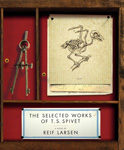 The Selected Works of T.S. Spivet (2009, Reif Larsen)
 Why I picked it: I read it soon after it came out. I didn't like it as much as I thought I would (I had very high hopes), but I liked it enough to buy it when I saw the hardback for $6.95 at Powell's. My intention was to read it again, and, when I started running out of books after 4 months of shutdown, that's what I did.
What it's about: A 12-year-old cartographer wins a prestigious endowed post from people who don't realize he's 12, and he sets out for the Smithsonian from his troubled home on a Montana ranch.
What I thought: It's quite possible I went into this book the first time with overly high expectations. It's about a map nerd! It's in an unusual wide-margin format because almost every page has little sketches and maps, and the advance reviews compared it to Pynchon and David Foster Wallace.
The first time around, the first chapters were exactly what I hoped it would be. Quirky kid, quirky family, lots of digressions, maps, maps, maps. It loosened its grip on me during his train ride. I had even forgotten there was a story within a story, as T.S. reads a notebook he stole from his mother. I figured that when he got to D.C., there would be some manic action as he takes the town by storm, and that's not how it goes. And the end seems a little rushed/abrupt. (When I was searching to see if the Hobo Hotline phone number actually works — it does — I came across a blogger on visualization who apparently had the same arc of interest that I did.)
So the second time, I didn't speed through the train trip. I paid more attention to T.S.'s interactions with his parents, and I thought about how the story his mother tells might tie in to his own. When he got to D.C., I was in the right frame of mind for what he encounters there.
It's not a perfect book — I still think it's better in the concept than the execution. But it's one of the rare books that I liked better the second time around.
Movie? I totally missed that this came out, in 2013, under the title "The Young and Prodigious T.S. Spivet." It's directed by Jean-Pierre Jeunet, which seems right. The biggest names in the cast are Helena Bonham Carter and Judy Davis, neither of whom is obvious for the role (Davis' character, in the book, is a man) but I imagine they do fine. It's not at my library; I'll watch it if I can find it.
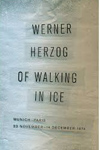 Of Walking in Ice (1978, Werner Herzog)
 Why I picked it: I am a fan of Herzog's movies and eccentricity. This book has been on my list for a long time, and when I realized the library would buy it at my request (see "A Complicated Kindness," below), I went for it.
What it's about: At the end of 1974, Herzog walked from Munich to Paris as a sort of talisman-in-action for a friend who was deathly ill. This is the journal he kept of those three weeks.
What I thought: This is a very short book. I spent almost less time reading it than I did putting his route on a Google Map. (My copy of the book does not have a map, a big drawback in my eyes.) It gives the reader a good idea of how Herzog's mind works — perhaps more so than the much longer "Conquest of the Useless," his memoir about the making of "Fitzcarraldo." One piece of information from "Conquest" that will make "Of Walking In Ice" much more understandable: Herzog contends he does not dream at night but has dreamlike visions throughout the day. Several of these are thrown into the narrative of "Ice" without any indication (other than their strangeness) that they are waking dreams.
It is not at all a travelogue; he spends little time describing the towns and the people, slightly more on the landscape, and a lot on weather and animals. There are only a couple mentions of his wife and child back in Munich, and one oblique reference to his feature film that had been released just weeks earlier — "The Enigma of Kaspar Hauser (Every Man For Himself and God Against All)," a big deal at that point of his career. Because it's not a pleasure hike or an adventure but a sort of quest compelled by fear of loss, the overall focus on misery and foreboding seems appropriate.
His friend did not die of her illness. A postscript notes that a decade later, when she was ready to die, she asked Herzog to drive to Paris to undo the "curse of immortality" he had activated with his walk.
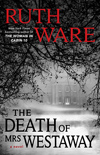 The Death of Mrs Westaway (2018, Ruth Ware)
 Why I picked it: I liked Ware's first thriller, "In a Dark, Dark Wood." Her follow-up, "The Woman in Cabin 10," annoyed me so much that I gave it up after putting in quite a few hours. The description of this one sounded good, and I thought I'd let it break the tie.
What it's about: A young woman in financial straits is notified that she has received a bequest from her "grandmother." Though she knows it is a mistake — the deceased woman is a stranger — she is desperate enough to try to claim the money, and in so doing ends up stuck in a creepy mansion with some unsettling people.
What I thought: I came close to abandoning this one, too, and for the same reasons that I gave up "Cabin 10": It was very slow going at the start, with every little action described and every dot connected, and the characters' actions and particularly their assumptions sometimes make no sense and are seemingly motivated only by concerns of plot development. Ware also occasionally seems to think her readers are not too quick on the uptake and hammers on certain developments or themes with a decided lack of subtlety. In the latter half, the story started to pick up a little bit, and I ended up sticking with it. I was still not happy that a very robust red herring was predicated on the protagonist's inability to identify in a photograph somebody she knew very well. Also, after all the very obvious buttoning-up, the book never indicates when a certain character had been killed -- that is, when nobody else would have been in the house. Maybe Ware is actually assuming it's something I'd figure out if I were paying attention, and it's the one place I'm waiting for some guidance.
What's next: I might just call it done with Ware — except that she has written an update of "The Turn of the Screw," and I'm a sucker for modern-day adaptations of classics (particularly James).
Beyond that, I do enjoy a tightly plotted mystery/thriller that gives the reader some credit, and I can't recall the last time I read one. I don't think I'd get into one of these "celebrity investigator" series (Lee Child, Lisa Gardner, Rizzoli & Isles, et al.). Maybe I should try Harlan Coben.
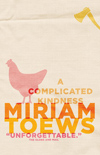 A Complicated Kindness (2004, Miriam Toews)
 Why I picked it: I've liked the three other of Toews' novels that I've read, particularly "All My Puny Sorrows."
What it's about: A 16-year-old girl and her father stumble through their lives in a Canadian Mennonite town after her mother and sister both leave without warning.
What I thought: I got this book through a program at our library by which, if they don't have a particular title you want, they'll have Amazon ship you a new copy and you can keep it as long as it takes you to finish it. I mention this because a) I think that is so cool, and b) I had to remind myself that this was technically a library book and I could not put smiley faces in the margins to mark the most hilarious lines.
I said of "Puny Sorrows" that it was a very funny book dealing with the suicides of the narrator's father and sister — actual events in Toews' life. This one is based on an earlier period in her life (the GSAFD classification is Bildungsroman) and, though I know Toews' mother didn't abandon her family, it similarly deals with somewhat autobiographical trauma in a way that had me laughing out loud, especially in the early chapters. The other novelist she reminds me most of (though her dialogue isn't as hilariously mannered) is Charles Portis, and that's high praise.
So: Funny. Told by an offbeat high-schooler. Set in Manitoba. Involves members of a Christian sect started by a proscriptive egomaniac. Basically ticks a lot of my boxes.
I kind of hope the library says, "Hey, nobody else is going to check this one out, why don't you just keep it."
What's next: On my list is Toews' memoir of her father's life. She has three novels I haven't read, but at least two of them seem a lot more serious than this, particularly the most recent, about horrific sexual abuse in a Mennonite community. Probably even Toews couldn't find the humor in that.
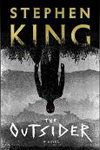 The Outsider (2018, Stephen King)
 Why I picked it: It's been a long time since I've read any Stephen King. The New York Times Book Review did a list of "Essential Stephen King" recommendations and picked this one for the person who wants "a great crime novel."
What it's about: An unlikely suspect — a well-liked youth sports coach and family man — is arrested for the horrific murder of a little boy. Then the evidence starts piling up that he was in two places at the same time.
What I thought: This is not the hard-core King frightfest but there's plenty of supernatural in it, particularly in the last half. When I was approaching the point when it turns from being a police procedural to a chasing-phantoms kind of thing, I wasn't sure I would want to stick with it. I did, though, and it moved along better than I had expected.
King's a good writer — his plotting, his dialogue, his characters. I particularly appreciated his socially awkward female investigator (who I've learned is a carryover from an earlier trilogy), though most of the women in this book are wives/mothers with no other occupations mentioned.
Movie? HBO did a 10-part miniseries this year written by Richard Price. I'd watch it if I had unlimited HBO, but it would not be at the top of my list.
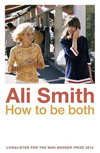 How to Be Both (2014, Ali Smith)
 Why I picked it: : Neither of the books I've reserved for library curbside pickup is ready yet, so I went back to ebooks. The first from my list that was available was this, a Booker shortlist novel by the woman whose quartet I'm 75% done with.
What it's about: It has two stories, one about a 15th-century Italian painter and the other about a teenage girl in modern-day Cambridge whose mother has just died.
What I thought: This is just shy of being too tricky for me. The stories are sequential rather than intertwined, and it's the reader's call which to read first. (In the print run, half the copies were printed with one story first, and half with the other.) I read the modern one first, and that was the one I preferred, but I liked both. I think it would be a little more confusing to read the Italian part first, since you would have no idea who the girl is whom the painter observes from purgatory.
One predilection of Smith's from her seasonal quartet is even more pronounced here: She refers obliquely to specific places, or works of art, or cultural touchpoints, and leaves it to the reader to figure out (or to decline to pursue) what she's talking about. If you are one of the figure-it-out readers (and I am), it's useful to be reading it on an iPad so you can just tab over to Google. I experienced a mini-Jeopardy! rush whenever I was able to identify one of these out without looking it up. (E.g., the film director who grew up in Ferrara was Antonioni, so the woman on the poster must be Monica Vitti. And the second half confirmed it was, when the painter-in-purgatory translates the name according to his dialect: Monica Victims.)
Even if you don't feel the need to pin down every reference, with this one you'll most likely want at some point to go look at the frescoes of Francesco del Cossa, from the delightfully named Palazzo de Schifanoia (Palace of Not Being Bored). Never heard of del Cossa? That's kind of the whole point. As Cambridge teenager George realizes in the middle of a school assignment, “there's so little known about him ... you can make a great deal of it up and not be marked wrong." Smith pretty much takes that and runs with it.
If I had thought a bit longer about this, I probably would have deferred this and gone with something other than Smith, for a little variety. But timing aside, I'm not sorry I read it.
 Spring (2019, Ali Smith)
 Why I picked it: Third part of the quartet.
What it's about: A bereaved movie director and a guard from an immigrant detention center both end up taking impulsive train trips from London to Scotland, where they travel on with a mysterious 12-year-old girl.
What I thought: I learned from "Autumn" and "Winter" that these books are going to be rather oblique and drifting before they settle into a narrative, so I gave this one some time, and it took quite a while to start weaving the threads together. I'd give "Winter" the edge, but this one was good, too. Of the three, it had the strongest political angle, involving refugees.
 The Miraculous Journey of Edward Tuland (2006, Kate DiCamillo)
 Why I picked it: I had read this before, when Alex was young, and remembered it as good but not great. Then I read an essay recently in the New York Times Book Review in which two novelists I respect declared it "life-changing," said it had "cracked them open and made them better people." So I thought it was worth another look.
What it's about: A little girl's china rabbit is lost, and passes through the lives of a succession of people.
What I thought: I can't say it changed my life. It is, however, a standout in the well-trodden genre of "lost toys find their way home," partly because said toy is not particularly likeable to start out with and partly because it is fairly dark. Maybe that's why I was lukewarm on my first reading — it's an odd book to read with a 4-year-old.
Movie? Apparently it's been in development for almost 10 years, with Robert Zemeckis attached.
 Winter (2017, Ali Smith)
 Why I picked it: I had recently finished "Autumn," the first in this quartet.
What it's about: A gathering at Christmas 2016 in England's Cornwall of two 70ish sisters who have been estranged for decades, the son of one of them, and the young woman the son is paying to impersonate his girlfriend.
What I thought: I might not have made it past the first chapter if I hadn't read and liked "Autumn." The start is trippy and a little baffling. The first character introduced (retired businesswoman Sophia) is not very likeable, and the second (her son, Art) comes across as pretty pathetic. I'm glad I stuck with it, though. I ended up liking it more than "Autumn." It feels longer (though I think they're about the same) because it has more twists and turns. It's smart and very funny in places, and there is redemption for Sophia and Art. On the face of it, it seemed less Brexit-focused than the first one, but there's a lot about activism and "saving the world," and a significant theme about being an immigrant in Britain. (It takes hard work, she says. Real graft and subtlety. It's a full-on education being from somewhere else in your country right now.)
About halfway through, I realized this would make a good movie, and I started thinking about how it might be adapted. Most of it is interactions between the four main characters, with some flashbacks for the two sisters; at least half of it would have to be cut to get it down to 2 hours.
What's next: I've started "Spring." "Summer" has not yet been published. I ran across a mention of Smith's earlier "The Accidental," and it sounds good.
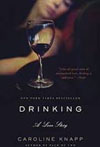 Drinking: A Love Story (1996, Caroline Knapp)
 Why I picked it: It was in the house when I needed a physical book, and Alex had gotten me interested in the topic by talking about her Neuroscience of Addiction class.
What it's about: A memoir by a Boston-based journalist about her decade of heavy drinking and her subsequent sobriety.
What I thought: It wasn't as fun to read as something like "Patrick Melrose," but it was someplace between that and actual scientific reading in explaining the psychology of addiction. A lot of the book has to do with Knapp's perception of herself, her relationship with her parents and her reliance on men in deciding who she should be.
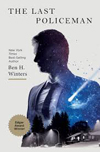 The Last Policeman (2012, Ben H. Winters)
 Why I picked it: I ran across a mention of it somewhere, and — after a couple internal and rather plotless books — it sounded like it had the action I wanted.
What it's about: A police detective in Concord, N.H., works a case as the world is in an uproar over an approaching asteroid.
What I thought: If I had read this three months ago, I would have had to expend a lot more bandwidth adjusting my brain to the end-of-the-world backdrop. As it is, I kinda felt like I was halfway there. The asteroid part is what sets this one apart. Other than that, it's a decent mystery, with good characters. I got a bit annoyed toward the end when the first-person narrator reveals he has it all figured out but he's going to wait for his big confrontation with the killer to give us the who and the why. I know that's a standard mystery thing, but I gotta think a writer as skillful as Winters might find a way around it.
This is the first of a trilogy, plus Winters has other mysteries. When I'm in the market for that genre again, I'll keep him in mind.
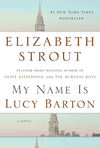 My Name is Lucy Barton (2016, Elizabeth Strout)
 Why I picked it: I told myself I'd read it to give Strout another chance because I liked her writing in "Olive Kitteridge" but I just couldn't give myself over to her very unlikable main character.
What it's about: A young wife and mother confined in a New York City hospital is unexpectedly visited by her own mother, who stays at her bedside for days.
What I thought: As in "Olive Kitteridge," Strout writes about rural poverty and class division. I was glad to see that. You could make the case that it's a neglected theme in fiction these days, and it's one that interests me. I might wish for a little more of a plot in this one, though, and I'll take a pass on the follow-up novel in which Lucy Barton is also a character. It's said to be of the same string-of-stories format as "Kitteridge."
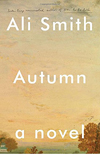 Autumn (2016, Ali Smith)
 Why I picked it: This only really came on my radar with the completion of the quartet (yes, the seasons — "Summer" is due out in July). I have finally, after 10 weeks of shutdown, run out of hard-copy library books and was looking for something to read on my iPad, and this was available.
What it's about: The relationship between a non-conformist songwriter and his neighbor as she grows from schoolgirl to adult.
What I thought: I liked both the personal story and the bigger context, the immediate aftermath of the Brexit vote. (I don't know how Smith got that into a book that was published four months after the vote. I guess most of the mood and issues were available for incorporation for months before, and then she just had to include the outcome.) I hope the other three continue the Brexit examination — I imagine they have to, if they're set in contemporary Britain.
I noticed this one was shortlisted for the Booker, so I checked what won that year. "Lincoln in the Bardo"! This one is good, but no contest. Actually, I would have voted "Autumn" third, because "History of Wolves" was also on the shortlist. Of the other finalists I had read and liked one ("Exit West") and figured I'd save for my stranding on a desert island another ("4 3 2 1") that is by a favorite author of mine but is EIGHT HUNDRED AND SIXTY pages long. The sixth is called "Elmet." I had never heard of it, but it sounds interesting. Good crop that year.
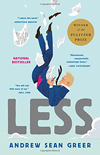 Less (2017, Andrew Sean Greer)
 Why I picked it: It won the Pulitzer Prize for fiction a couple of years ago. Actually, though, it still wasn't high on my list. But I was still seeing recommendations for it, and when I needed an audiobook, it was available, so I went for it.
What it's about: A gay San Francisco writer on the brink of 50 impulsively decides to take a round-the-world trip to avoid his ex-lover's wedding.
What I thought: I would recommend this one to just about anyone. For one thing, it's a comedy, and it is funny — in the dialogue, the metaphors, the one-liners. By which I mean to say the narrative and the events are not inherently funny. Apparently, Greer was originally writing this as a — drama? tragedy? Those don't seem right, but as a non-comedy, anyway. (This is one of the meta-elements: The main character, Arthur Less, ends up reworking his peripatetic-midlife-crisis novel as a comedy.) And it is also thoughtful about universal (i.e., not specifically gay or male) themes of love and aging. Finally, it's very skillfully put together. It seems on its face to be a straightforward chronology of Less' travels, but it weaves in the background and it subtly drops breadcrumbs toward the climactic episode, as the mysterious narrator's voice becomes more pronounced.
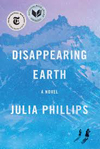 Disappearing Earth (2019, Julia Phillips)
 Why I picked it: It got good reviews — one of NYT's top five fiction books of last year, PBS book club, that kind of stuff. Also, I was intrigued that it's set on the Kamchatka Peninsula, a place I know little about.
What it's about: The bookend episodes — the abduction of two preteen sisters, and their mother's search for them — bracket interlinked vignettes of people in modern-day Kamchatka, one for each month in the year after the disappearance.
What I thought: I knew going in that this one wasn't a conventional thriller, but I did not expect how far the narrative would wander. All of the vignettes have at least a mention of the girls' disappearance, and toward the end, the characters start showing up in each other's chapters, but it really doesn't all tie together until the very end. I started getting a little weary of this string of stories about unhappy women and cloddish men. I had expected something a little less quotidian. The writing is good, though, and I did like the setting, which was presented as an Alaska-like place — few cities, natural beauty that draws tourists, substantial native population still following traditional ways of life.
I think I have to say something about the end, but it's enough of a thriller that I don't want to give it all away. The mystery is solved. The reader has known from the beginning that the girls were abducted (this is not a given to some of the characters) but does not know the culprit. The threads of the early chapters are woven together over the course of the novel to make the outcome plausible. Plausible, but unlikely, but the way it had to end if there was to be any sort of reader satisfaction.
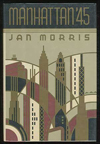 Manhattan '45 (1987, Jan Morris)
 Why I picked it: Manhattan in 1945 would be an appealing time-machine destination for me, and I liked Morris' "Trieste and the Meaning of Nowhere."
What it's about: A snapshot of Manhattan in 1945 — neighborhoods, commerce, politics, transportation, entertainment, etc.
What I thought: If I had known anything about this one going in, I probably wouldn't have started it. I could have realized my misconception if I had just thought about it for 10 seconds longer. Jan Morris is old but she's not 100, and she would have to be close to that if she actually wrote this from her first-person observations in 1945. It turns out Morris (who is 93) made her first trip to New York in the mid-1950s and wrote this more than 30 years later through research.
Her research is fine, and I don't doubt any of the portrayal, but I couldn't really get behind the whole idea of her trying to write basically a travel book about a time/place that she never experienced — and from the omniscient future vantage.
Her solution is to put all the modern perspective in footnotes, writing the main text as if she's a 1945 visitor. The main problem is that, given the conceit, she writes without regard for some of the lenses/contexts that the modern-day reader expects, particularly economic and social inequity. The voice she uses is that of a privileged visitor unquestioning of the values of the 1940s. The chapter called "On Race" veers into the distasteful, as when the narrator marvels at the well-dressed professional black men one encounters in Harlem. ("Good Lord, did black people really occupy these fine houses … which looked just made for nannies, nursery schools and the walking of pedigree dogs? … Was that swish tennis club, the Metropolitan, really for blacks?") I much preferred the later chapters, on things other than people — apartments, stores, night life, boats, newspapers.
So, despite the frequent delightful factoids I picked up, I probably would have been better off to go for one of Morris' other books. I'd like to read "Coast to Coast," her account of her American driving trip in the 1950s, and perhaps "Venice." I think I also started her "Oxford" on a summer trip a couple years ago and never finished it.
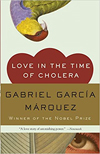 Love in the Time of Cholera (1985, Gabriel García Márquez)
 Why I picked it: I needed to break my split decision on García Márquez — yes for the novella "Chronicle of a Death Foretold," meh for "One Hundred Years of Solitude" — and this is his other big novel.
What it's about: In a Colombian port city in the late 1800s, a young man loses his intended to another suitor. Fifty years later, he resumes the courtship.
What I thought: Decision to GarMar. I give it a qualified thumbs up. None of the main characters are particularly delightful — I particularly was repelled by Florentino's long-running molestation of an adolescent girl — but I liked the storytelling and the setting.
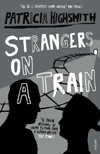 Strangers on a Train (1950, Patricia Highsmith)
 Why I picked it: I was getting the Ripley books from the library for Alex, and this one, which I hadn't read, was right there.
What it's about: An unhappy husband meets a twisted young man on a train who drags him into a murderous plot.
What I thought: It isn't bad, but I would recommend people jump straight to Ripley. This one seems a little like a warm-up for that, with its amoral killer and homoerotic undercurrent. The plot also got off to a bumpy start for me, because I don't have enough of a grasp on the mores of the time to understand why our hero Guy is so stymied over how to end his marriage, given that his wife is pregnant by another man. But it does a good job of getting the reader to put himself in Guy's head — the what-would-you-do sort of narrative. I also liked the descriptions of the settings: the tourist views of Santa Fe and Mexico City in the late 1940s, and an amusement park in Texas.
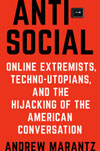 Antisocial: Online Extremists, Techno-Utopians, and the Hijacking of the American Conversation (2019, Andrew Marantz)
 Why I picked it: Topic of interest to me.
What it's about: How we got to this place of such ugliness in online discourse.
What I thought: I've read a few other books on this topic, and this one was definitely the best. It is comprehensive, and really fun to read. I'd read some of Marantz's writing on this topic in the New Yorker, but this goes far beyond just a compilation of those articles.
The book has six parts, each focusing on a person or group of people, and it explores, well, basically like the subtitle says — how the well-intentioned "online community" was hijacked. Some of the hijackers were just out-and-out sociopaths or racists. Some were people who saw themselves as smarter than everyone else and so resisted conventional wisdom and conventional courtesy. Some were looking to make money and realized that clicks = profit. Some saw the internet as a place to amuse themselves, even at the cost of someone else's pain. Some were looking for community and purpose, and they fell in with who they thought were like-minded people. And they all pretty much were allowed to run wild because of the somewhat naively idealistic vision (that's the most charitable read) of the men who created Reddit and Facebook and Twitter.
I don't think my employer — or even me — is completely without blame for some of the less admirable elements of online journalism. The part about "king of clickbait" Emerson Spartz, in particular, mentioned several headline tactics that were familiar to me — some of which I didn't even know were acknowledged tactics, just things that worked in terms of getting clicks.
I can't say I felt any less pessimistic on finishing this book, but I did feel like I understood a little bit better this whole trollosphere, the fringes of which I have to deal with every day.
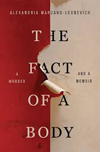 The Fact of a Body: A Murder and a Memoir (2017, Alexandria Marzano-Lesnevich)
 Why I picked it: I ran across a mention of it that described it as genre-bending — true crime woven with personal discovery — and that sounded interesting.
What it's about: The crime is the 1992 murder of a 6-year-old Louisiana boy by a pedophile neighbor. The first-person part is the memoir of a woman who as a student had interned with the killer's appellate lawyers.
What I thought: For the first half or so, I thought it was pretty well done. It set up how Marzano-Lesnevich became acquainted with the case, then went back and forth between the crime/investigation and the writer's childhood. Neither of them is a hugely gripping tale — it was a fairly ordinary child murder (horrible as that is to say), and M-L's family life, though dysfunctional, was nowhere near, say, "Educated" levels. (I wasn't a big fan of "Educated," but I acknowledge that was a seriously fucked-up situation.) Still, she's a decent writer, knows how to structure a narrative.
At some point, though, it became a bit of a stretch for her to maintain the device of twining the stories, particularly since it becomes obvious that she had very little to do with the killer's defense. She conducted her research instead specifically for her memoir 20 years after the fact, and that research was mostly reading the trial transcripts and other people's accounts, rather than firsthand reporting. There's a lot of "imagining" and "re-creating" that goes beyond what I'm comfortable with in ostensible non-fiction, and her prose becomes quite dramatic. Too much is made of some of the connections on which the whole structure hangs: "Two of his siblings died before he was born, and my sister died when I was a baby! And the dead boy has a half-sibling who was born six months after the murder!" Though I have sympathy for the substantial trauma she went through, I started to realize she isn't a person I'd want to spend much time with, in real life or in print, and I didn't linger over the last chapters.
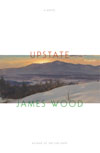 Upstate (2018, James Wood)
 Why I picked it: Saw a couple good reviews, and I was familiar with Wood from his criticism for the New Yorker. Also, very nice cover, a Frederic Edwin Church painting.
What it's about: A 60ish British man and his daughter travel to New York after hearing from his other daughter's boyfriend that she is in an emotional crisis.
What I thought: Good book. Very thoughtful on the topics of family, love, passion, tradition, change, whether one can really know somebody else. I also liked reading the British protagonist's thoughts about America on his first visit to upstate New York (specifically, Saratoga Springs and Troy, which I drove around on Google Streetview while reading this). I wasn't far in before I started envisioning him as Bill Nighy, and it totally worked.
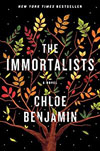 The Immortalists (2018, Chloe Benjamin)
 Why I picked it: Read a mini-review and thought, wow, what a good premise.
What it's about: Four siblings who, as children in 1969, were told by a fortune-teller the dates of their deaths.
What I thought: OK, it is a good premise. How would you live your life if you had been told — even if you didn't truly believe it — that you would die at 20 or 30 or 90?
The novel follows each of the siblings serially, by order of death. The first part is long, the second less so, the third quite short and then the fourth is drawn-out. By the fourth part, it was losing momentum. I stuck with it, but the story was diminished for me by carelessness with some real-world facts.
The carelessness was particularly jarring because Benjamin put in a lot of verifiable detail — specific addresses, numbers of bus lines in San Francisco, the pre-Vegas biography of Siegfried & Roy, that sort of thing. In fact, it got a little heavy-handed at times, like "Look how much research I did!"
But after a few unlikely coincidences and out-and-out errors of fact*, I realized, OK, the encyclopedia details do not necessarily imply careful plotting. If I think I'm seeing a "clue" or some suspicious element that's going to be important later, I am most likely wrong. It's an unintentional red herring, if there is such a thing. So I damped down my critical brain and just read everything at face value — this guy is really an FBI agent, this guy is really a newspaper reporter — even if things seemed hinky. And I don't like to read novels that way. I don't demand trickiness or surprises, but I like to think there's a smart storyteller at the helm, giving the reader a chance to be an astute observer.
There was one piece of dialogue in Part 4 that with a more conscientious writer I would have thought, "Whoa, big red flag." But because I figured it was just sloppiness instead of significance, I told my brain to ignore it. And then when it turned out it actually was intentional, I was so surprised I exclaimed out loud. That conversation leads to the revelation of a secret that even a discerning reader could not have been expected to guess, because it's sort of a "ha, tricked you!" twist on something the writer has already told us.
The other thing that made the end of the book a bit of a slog is that the last sibling is the one I found least likable. Part 2 was my favorite, and 1 and 3 were pretty good, but I probably could have walked away with 50 pages unread and not felt any qualms.
* Some of the things that bugged me were just developments that seemed unlikely — improbable devices used to move the story along and tie the narrative together. A few details, though, were so disconnected from truth as to be baffling:
• One of the characters, a magician, performs at "California desert casinos" in the late 1980s. The first such casinos opened in 2001.
• That same character, who can barely afford groceries and lives in an RV at a rundown trailer park, has a carphone, which in the late '80s was a luxury item.
• The temperature is said to be "above 90" on the night (the night!) of Dec. 28, 1990. It takes five seconds with Google to find out that Vegas' record high for December is 78 degrees. Plus: That particular week, the last week of 1990, Las Vegas experienced a historic cold snap, and nighttime temperatures were below 20.
• A character named Luke mentions that his brother has the same initials as he does. Luke's brother's name is Asher.
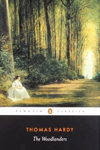 The Woodlanders (1887, Thomas Hardy)
 Why I picked it: This is the one I thought I was getting when I read "Under the Greenwood Tree." And it was the only major Hardy novel I hadn't read.
What it's about: Two young women in a small Dorset village circa 1860, and their romantic misfortunes.
What I thought: It was much better than "Greenwood Tree," but I'd still put it below the other Hardy novels I've read. (Except maybe "Jude the Obscure." I have a complicated relationship with "Jude.") I guess I would have liked it to be a few clicks more tragic, and have a different resolution to the marriage that's at the heart of the narrative.
The good stuff is what is always good about Hardy: his cinematically vivid imagery, his deft plotting. He is so great at setting up a chain of events without tipping off the reader until all of a sudden everything clicks into place and it's like oh my god, look how that worked. In this book, there's some casual business with a gray horse bought for the young woman Grace that is just part of the color of everyday life — and then chapters later, the horse, having meandered through the intervening action, drives a significant narrative turn. Hardy always gets me thinking "could this be adapted as a contemporary story?" because the relationships of his characters seem so modern and complex. With this one, I was thinking, yes, I could do it — even figured out a way to replace the horse with a car — but the novel starts with a scene in which a young woman is coerced into cutting off her hair and selling it to a rich woman, and I kept thinking I would not put it past Hardy to all of a sudden bring that hair back in. And he does, though I think I could get around that in the adaptation. I ended up deciding I couldn't put it much past 1950, though, because of a matter involving family law.
In this one, I also liked the focus on the woodlands, and how life in Little Hintock is so enmeshed in the seasons and the trees. There's an episode early on, one of those that reads like you were watching it in a movie, where an old man's bizarrely intimate relationship with a certain tree comes to an end, and it's darkly hilarious but also touching.
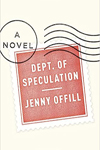 Dept. of Speculation (2014, Jenny Offill)
 Why I picked it: Offill's new novel, "Weather," has been getting a lot of press, and all the reviews speak highly of this one.
What it's about: A marriage, from start to collapse and beyond, told in little bites.
What I thought: I was lulled by the brevity and the fragmented format into thinking of this as a quick read, but then occasionally it would spring on me insights and depths I wasn't expecting. I particularly liked the portrayal of the narrator's daughter, growing from infancy to the brink of her teens. I wouldn't give this one a big recommendation, but I'm keeping "Weather" on my list.
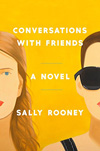 Conversations With Friends (2018, Sally Rooney)
 Why I picked it: I liked Rooney's "Normal People" from 2018.
What it's about: An undergraduate in Dublin circa 2014 becomes involved with the husband of a woman she knows.
What I thought: Rooney has just these two novels so far, but even if she had more I wouldn't be leaping to the next one. Both are concerned with the power dynamics of personal relationships, particularly where class/wealth is involved. They're thoughtful and well-written, and I enjoyed them both, but — especially given that they're very similar in setting and tone and characters — I'm not hungry for more. Part of that might be my preference for novels that take me to a different world. Though these characters are Irish and 20-30 years younger than me, it wasn't a stretch for me to access their concerns and conflicts. The one major theme that is a bit of a generational disconnect from my view is the characters' detached, even ironic, approach to sexual relationships. Everybody seems resistant to declaring love or even any sort of desire or attachment.
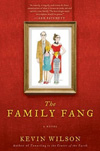 The Family Fang (2011, Kevin Wilson)
 Why I picked it: Wilson's "Nothing to See Here" was in my top five last year.
What it's about: Two siblings have been scarred by their upbringing as participants in their parents' performance art pieces. As young adults, both suffer personal/professional setbacks at the same time and end up back at their parents' house.
What I thought: Not nearly as good as "Nothing to See Here" (the rough plot of which has a cameo in this book as a movie project of one of the characters). "Nothing" seems to me a lot more focused and simple (though its premise is undeniably bizarre), and it lets one really well-drawn character pull the action along. "Fang," by contrast, is quite frenetic — never really settles down, and every chapter there's another strange twist, clear to the end.
Movie: Hadn't heard of it before, but there's a 2015 feature directed by Jason Bateman and starring Bateman and Nicole Kidman as the siblings (both playing 15 years older than the book) and Christopher Walken as their father. Didn't get great reviews, but ... Christopher Walken.
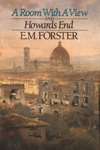 A Room With a View (1908, E.M. Forster)
 Why I picked it: I had just finished "Howards End."
What it's about: A young woman in Edwardian England fights her attraction to an unconventional man.
What I thought: At least right now, I like this one better than "Howards End." It's more lively, with younger main characters, a less ambivalent ending. Although, somewhat contradictorily, it seems less modern, particularly in all the fuss at the start about a kiss.
Movie: I rewatched the 1986 Merchant/Ivory version. It held up very well. Daniel Day Lewis is great as Cecil — he's still every inch the prig he is in the book, but Day Lewis makes him kind of amusing and worthy of sympathy — even though the movie pretty much denies him the tearful mea culpa in his final scene with Lucy. Earlier, there's a blink-and-you-miss-it shot where Cecil is seen out a window over someone's shoulder and he's swatting at a bee or something; it's one second of genius physical acting. I also forgot how good Simon Callow is as Mr. Beebe. Because of the necessary condensing of the narrative, you don't get to see the full opening up of George, but Julian Sands is still very good.
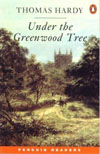 Under the Greenwood Tree (1872, Thomas Hardy)
 Why I picked it: I have liked other of Hardy's novels — in descending order of preference, Tess of the d'Urbervilles, The Return of the Native, Far From the Madding Crowd, The Mayor of Casterbridge, Jude the Obscure. I thought I had run across a mention that "Greenwood Tree" was Hardy's own favorite, but now I'm wondering if it wasn't "The Woodlanders."
What it's about: The courtship of a young couple circa 1830 in Hardy's Wessex (southwest England).
What I thought: This is an early Hardy novel, and it's much different than those that came later. It's sentimental and humorous, with none of the dark tone I associate with Hardy. For me, it was too sentimental. The main characters are a rather uninteresting young man and an immature young woman (though she matures somewhat by the end of the novel). It's short, thankfully. I appreciated it most for its humor, some intentional* and some not**.
*When one character says of another's wife, "'Tis my belief she's a very good woman at bottom," and the husband replies, "She's terrible deep, then."
**There are multiple references to the "back hair" of women, which are quite funny if you interpret that as the hair on one's back rather than the hair on the back of one's head. I also laughed out loud when Dick is returning from "nutting" and encounters his beloved on a dark path: " 'Is it you, Dick?' 'Yes, Fancy,' said Dick, in a rather repentant tone, and lowering his nuts."
What's next: I might still read "The Woodlanders," but I hope it's not as sweet.
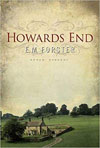 Howards End (1910, E.M. Forster)
 Why I picked it: I hadn't read any Forster since "A Passage to India," and that was decades ago.
What it's about: Two sisters in early 20th-century London, and their dealings with a wealthy industrialist's family and a poor clerk.
What I thought: I had seen the Merchant-Ivory movie of "Howards End" when it came out, and in my mind it was apparently mixed up with "A Room With a View," because at first every new character I kept thinking, oh, is this Daniel Day Lewis? Eventually I straightened out which movie this was — Helena Bonham Carter, Emma Thompson, Anthony Hopkins — though I didn't have much recollection of the plot.
It's a good book. It occasionally gets a little talky, but that's mostly the sisters' dialogue, and it's in keeping with their earnest, emotional characters. That's tempered by a drily whimsical tone that occasionally bubbles into funny passages:
• "The niece was now mortified by innumerable chickens, who rushed up to her feet for food. She did not know what animals were coming to."
• "'A woman's been here asking me for her husband. Her what?' (Helen was fond of providing her own surprise.) 'Yes, for her husband, and it really is so. ... I offered Bracknell, and he was rejected. ... Oh, dear, she was incompetent! She had a face like a silkworm, and the dining room reeks of orris-root.'"
It was more modern than I expected, except perhaps in the matter of the marriage of two of the main characters. I had a hard time understanding why she married him, and stayed married, and I suspected that a lot of the reason was that it was 1910.
What's next: I'll put "A Room With a View" on the list, and I might want to reread "A Passage to India."
Movie? BBC did a 4-episode version a couple years ago that I'd like to see. Seems kind of odd casting that patriarch Henry Wilcox — the Hopkins role — is played by Matthew Macfadyen, who was barely 40 at the time
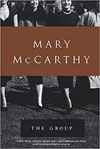 The Group (1963, Mary McCarthy)
 Why I picked it: I've been running across mentions of it for years.
What it's about: Nine new Vassar graduates in the 1930s.
What I thought: I knew this came out in the early '60s, so I figured it was set in the '50s. It's not. It starts in 1933 and runs for six or seven years. Oddly, it even feels like it was written in the '30s. Except for one sex scene, it feels a lot more like Booth Tarkington than McCarthy's contemporaries on the best-seller list (Salinger, Bellow, even "Up the Down Staircase.") The attention to psychoanalysis and breast-feeding in particular feels really dated, and the whole tone is pretty melodramatic. The main events that befall the women are connected to the men who dump them or mistreat them. Maybe this is just accurate toward the time — that Vassar women in the 1930s ended up as overeducated wives and mothers rather than professionals — but it makes for kind of a pathetic narrative.
I found most of the women unsympathetic — not just the couple I assume I'm supposed to dislike, but everyone except the oddest duck, Helena.
So, yeah, no recommendation from me. And no desire to see the 1966 movie, though Sidney Lumet directed.
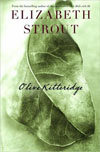 Olive Kitteridge (2008, Elizabeth Strout)
 Why I picked it: It was very well-received when it came out, but I didn't find the description appealing — Olive sounded like a pretty odious person to me. But the HBO miniseries sounded good (Frances McDormand, Bill Murray, Peter Mullan), and now there's a book sequel, so I thought I'd give it a shot.
What it's about: A woman — wife, mother, schoolteacher — who lives in Maine. It ends in the 2000s, when she's about 75.
What I thought: I doubt I'll read the sequel. I know Olive is not supposed to be likable, and there is, I guess, a little redemption toward the end, but overall I found the book too bleak and depressing because of the way Olive treats people. It's written as 13 chapters, each of which could stand alone as a short story, and four of which include only a passing mention of Olive. I liked the writing style. I've had Strout's "My Name is Lucy Barton" on my list for a while; it doesn't sound like it's a barrel of fun, either, but I might still give it a try.
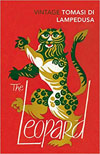 The Leopard (1959, Giuseppe Tomasi di Lampedusa)
 Why I picked it: I had hastily and/or partially read it many years ago and wanted to do it right.
What it's about: A Sicilian prince in the later part of Italy's Risorgimento, when Sicily was united with the states of the Italian peninsula.
What I thought: I think I almost spent less time thinking about the story than about 1) how this book came to be, and 2) how it came to me.
To take the second first, I have a vague memory of being assigned to read this in college -- I can picture the paperback copy I had — and I'm thinking it might have been for a historiography class I had in my first quarter a freshman. At any rate, not much of it stuck. I have a much stronger memory of seeing Visconti's movie, at an old Hollywood movie house. I think that must have been a 20th anniversary release, which would put it in 1983. I have recently been wanting to rewatch the movie and figured it would be good to read the book properly before I do.
On to the first matter: I started reading the book (this time) with the assumption that it was written in the early 20th century, maybe 50 years after the events described. And then at one point the narrator, in something of an aside to the reader, mentions traveling by jet. And I'm thinking, OK, there's probably a non-anachronistic explanation; I mean, Dickens' "Bleak House" (1852) mentions "a magnificent refrigerator." But I flipped to the front and, yep, this was published only three years before the movie came out. It got me wondering what was going on in Italy in the late 1950s that a book like this would become such a hit (and it apparently was, popularly and critically). That piece of history is something of a blank to me. I think my main source would be Elena Ferrante's Neapolitan Novels, which don't give many clues as to why Italians would be nostalgic for 100 years previous. Maybe that's what I was supposed to be figuring out in historiography class.
So, finally, the story. It's a lot less involved with specific historical events than I remembered. The reader can get by with a very basic familiarity with Garibaldi. It is more about the end of an era, and how the fictitious Prince of Salina — one of "the lions, the leopards" of that era — deals with it. I liked the prince, and I liked the sense of place and of a way of life. The narrative goes a lot quicker than I had expected. The chapter about the prince's last hours is perhaps the best depiction of death I've encountered except maybe "All That Jazz." I thought it could have ended right there but there's a coda about his daughters in their old age. I'm definitely glad I read this book
The movie: I rewatched it right after finishing the book — Criterion's three-hour Italian version. (Though almost all the actors were Italian and spoke Italian for the movie, Burt Lancaster spoke English, as did Claudia Cardinale, for some reason, and Alain Delon spoke French. The Italian version dubs those three. The shorter American version, disavowed by director Luchino Visconti, uses Lancaster's own dialogue and everyone else is dubbed.) It is a good and faithful rendition of the book, though it ends much earlier (to my thinking, an improvement). There were unexpected little touches from the book that aren't called attention to but add to the whole atmosphere — the cake called Triumph of Gluttony, the party urinals, the constant presence of the dog Bendico (who turns out to be quite an important character in the book). It includes a lengthy battle scene which was not in the book and which I don't think adds anything — it's the sequence that looks the most dated from a cinematic point of view. A good movie, and enhanced by my reading of the book.